Revitalizing the Roundhouse in 1998
In November 1998, revised plans by architect John McAslan were unveiled for a new, exciting Roundhouse - a centre for creativity in theatre, art, film, TV and fashion. It could cost £24 million and be completed by AD 2002. Encouraging the creative energy of young people is one of the main purposes behind of the building.
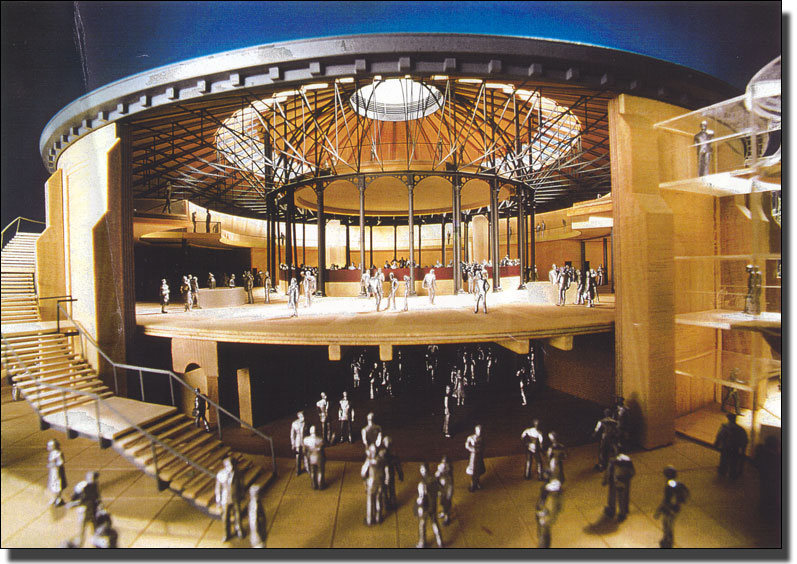
The Roundhouse will be developed as four separate levels, the Undercroft at street level; the Main Theatre above; a new Balcony Level running round two thirds of the building; and ‘The Lid’, a new performance area in the conical roof. Altogether there will be four performance area, with seating for up to 1200 people and the building could absorb 2,500 for pop concerts. These would be held about six times a year.
The existing entrance staircase will be removed and a new glass-fronted entrance, with a spiral glass staircase and a glass restaurant, will be built to give a bright, welcoming presence. The present, drab front will be transformed.
The general public is familiar with the main auditorium of the Roundhouse, with its circle of pillars which used to enclose the heavy turntable mechanism, and the radiating bays outside which held the pairs of railway lines and inspection pits where the trains used to stand. Today the pits have been filled in to give a level floor and the steel lines have gone. However, very few people have seen the Undercroft, the floor below, which supports all this. In discussing the redevelopment of the building, let us start there and work upwards to the roof.
The undercroft was built entirely below ground. The massive yellow brick retaining wall which was described earlier, extended along Chalk Farm Road to support the immense weight of the railway marshalling yards (now the car park). The undercroft was there to contain the turntable in the centre and to support the weight of the engines in their bays. It was simply a weight-bearing raft resting on the London Clay. Later, when the trains had gone and entrance was made from Chalk Farm Road, the space below was of very little use as it was full of solid wedges of brick, with narrow barrel-vaulted passages between them.
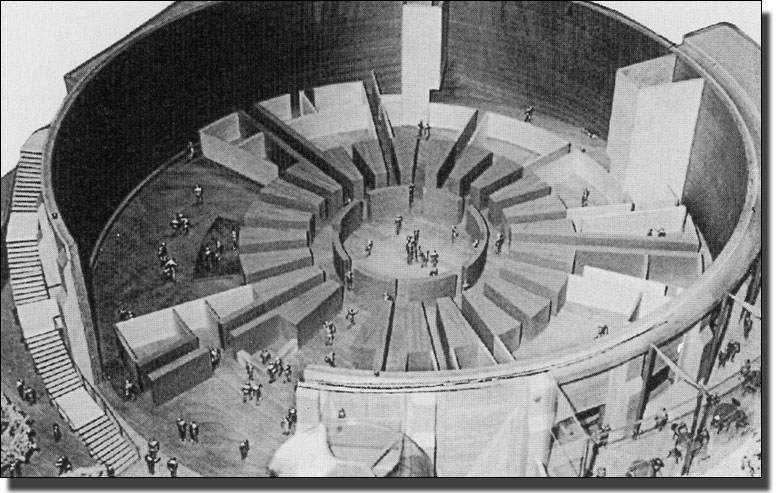
The model of the Undercroft showing the engine support segments.
When Gilbey's used the Roundhouse as a bonded store, goods were lowered by crane to carts the carts below. The present outside staircase is a recent addition and will be removed.
The central circular room in the undercroft, which used to contain the turntable, is an impressive space which will become a performance area and meeting place. Its outside wall is the circular foundation for the ring of pillars above and must be retained.
On the other hand, the wedge-shaped brick blocks outside the ring, which housed the engine pits, serve no purpose today as the trains have gone. With the permission of English Heritage they will be removed completely, to make room for performance areas, music practice rooms, TV and video studios, offices and work-rooms.
Displaying the History of the Building
Removing the brick wedges will mean removing the floor of the main auditorium, as it stands on the top of them. I would make a personal plea for one of the wedges to be retained as a continuing example of how the building used to function. In the undercroft this would leave three large surfaces; two flat sides and one curved end. One flat surface could display the history of the building - all the etchings and engravings of the building in its different states - while the other could be a huge mural telling the modern story. It could become a wonderful story board.
++different
The wedge of floor above would also be retained so that people would be able to understand the size of the tiny engines which were in use when the Roundhouse was opened. One might even consider reopening the inspection pit, with its steps down, replacing a pair of lines and placing a large photograph of one of George Stephenson's engine opposite, on the outside wall. The Science Museum might be willing to help. It would become living history.
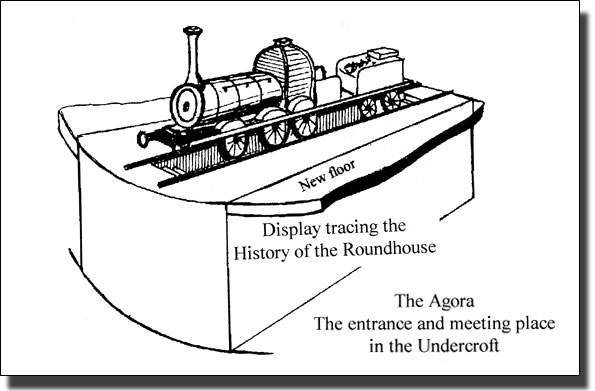
One supporting sector retained, the inspection pit reopened,
and perhaps an old on loan from some railway museum.
Let us return to the current plans.
The New Balcony Level

(move your mouse over the
picture to display the labels)
A new balcony floor stretching round about two thirds of the building will be created around the central ring of pillars. As one enters the auditorium from the street, the nearest third will open into a huge space clear to the roof. With the immense circular window running round the roof and light able to flood in, this will give a sense of space and exhilaration. The balcony floor will provide seating for large audiences, or promenade space at other times. Opening from this will be costume-making and wardrobe departments, studios of different types, offices and other facilities.
The Lid
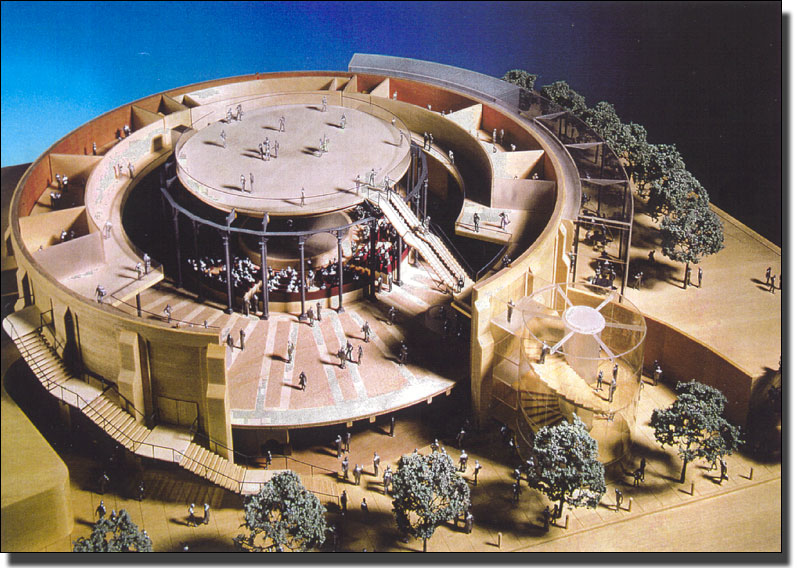
The 'Lid' with a staircase from the balcony level.
Ever since Thelma Holt first introduced it, theatre companies have tended to suspend some sort of canopy over the top of the central ring of pillars to contain the sound. They have also draped the columns, so that performances have taken place in a marquee inside the main building. Through this tent they have had to insert their overhead lighting.
In place of this there will be a solid circular roof suspended within the central circle of cast iron pillars on an elegant daddy-long-legs. Thin steel tubes will rise just inside alternate pillars and curve inwards to support the new floor and performance area, for the new roof will itself become a small theatre and rehearsal space. The steel tubes will be so fine and so close to the original pillars that they will become invisible.
The circular roof will act as an acoustic barrier, absorbing and reflecting sound; house the lighting grid, air conditioner and other technical equipment; and support the acting area above, for the Lid will become an acting/rehearsal area in its own right. It will not be possible to give performances in both spaces at the same time, but one could be used for rehearsals while a performance is taking place in the other. The Lid will be approached by stairs from the Balcony and by lift to give disabled access.
The Roof
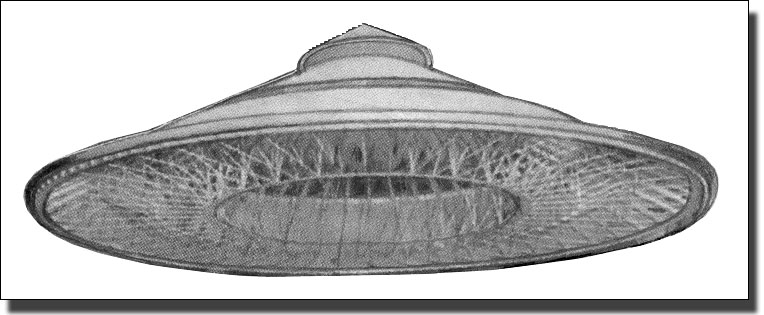
The roof, which is made of wooden rafters and slates, was built to shelter railway engines. It is not insulated against heat or sound. Noise from inside pollutes the local streets, while traffic noise from outside interferes with the performances. In ‘O What a Lovely War’, for example, the actors were forced to use microphones. It is clear that the roof must be insulated.
Secondly, the roof was not designed to hang things from. It will support itself, but nothing more. These problems will be tackled by removing the slates and adding a strong conical grid of 30 cm steel bars, in the form of a coolie's hat, adding thermal and sound insulation, and replacing the slates. The only sign of change will be a very slight raising of the roof.
The circle of windows, at present lost in the roof space, will be exposed and allow in light to the Lid and the building in general.